 EN
EN LT
LT RU
RU
Dental Implants
- An advanced and reliable way to replace missing teeth
- Highly qualified specialists
- We use “Straumann,” the world's leading Swiss dental implants
Preliminary price from
1770 €
Darbo valandos
I – IV 8.00 – 20.00
V 8.00 – 18.00
VI-VII Nedirbame
Lokacija
Nemenčinės pl. 4E, Vilnius (Antakalnis)
The Dental Implantation Process
1
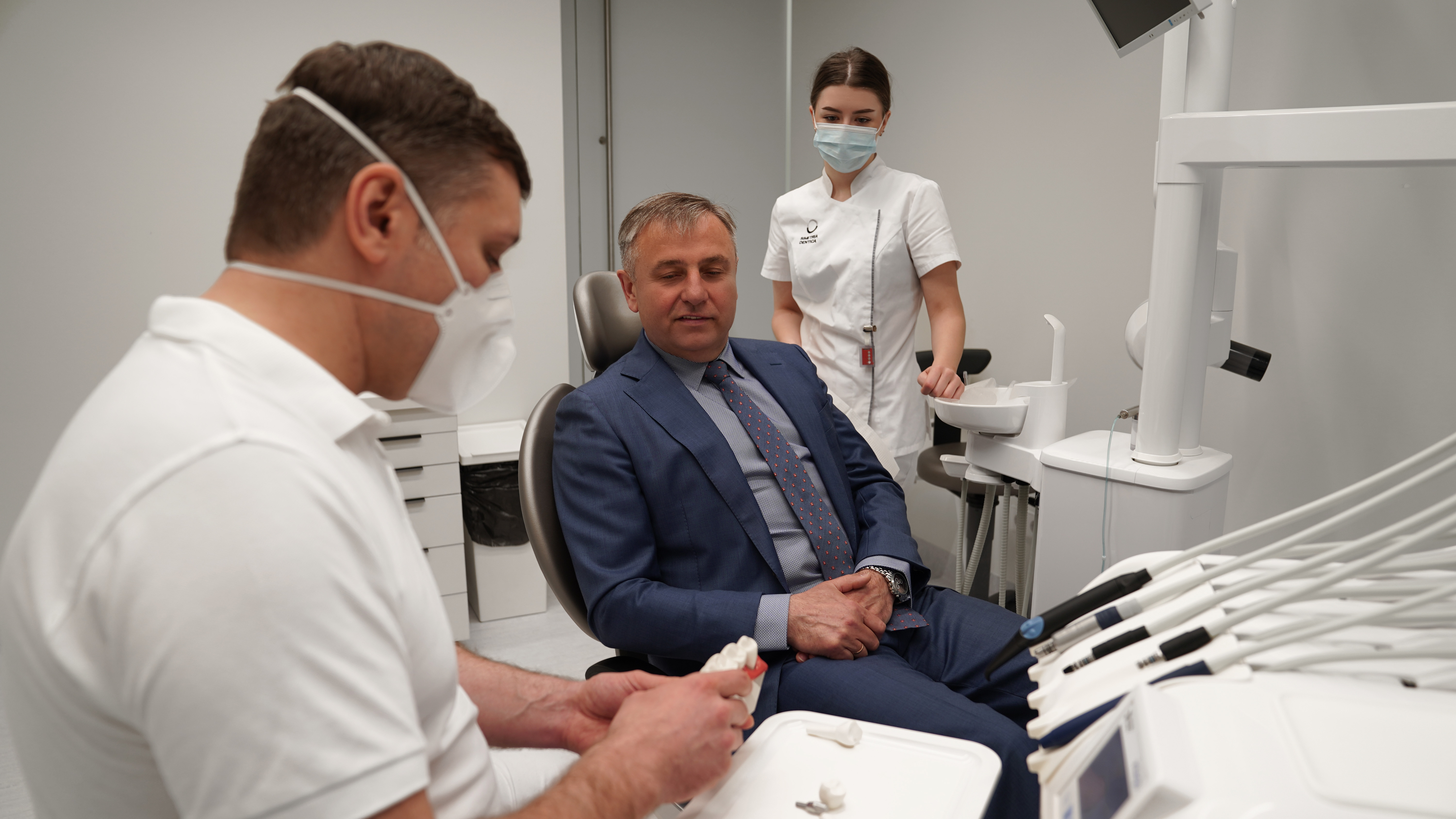
Assessment of the condition during the consultation
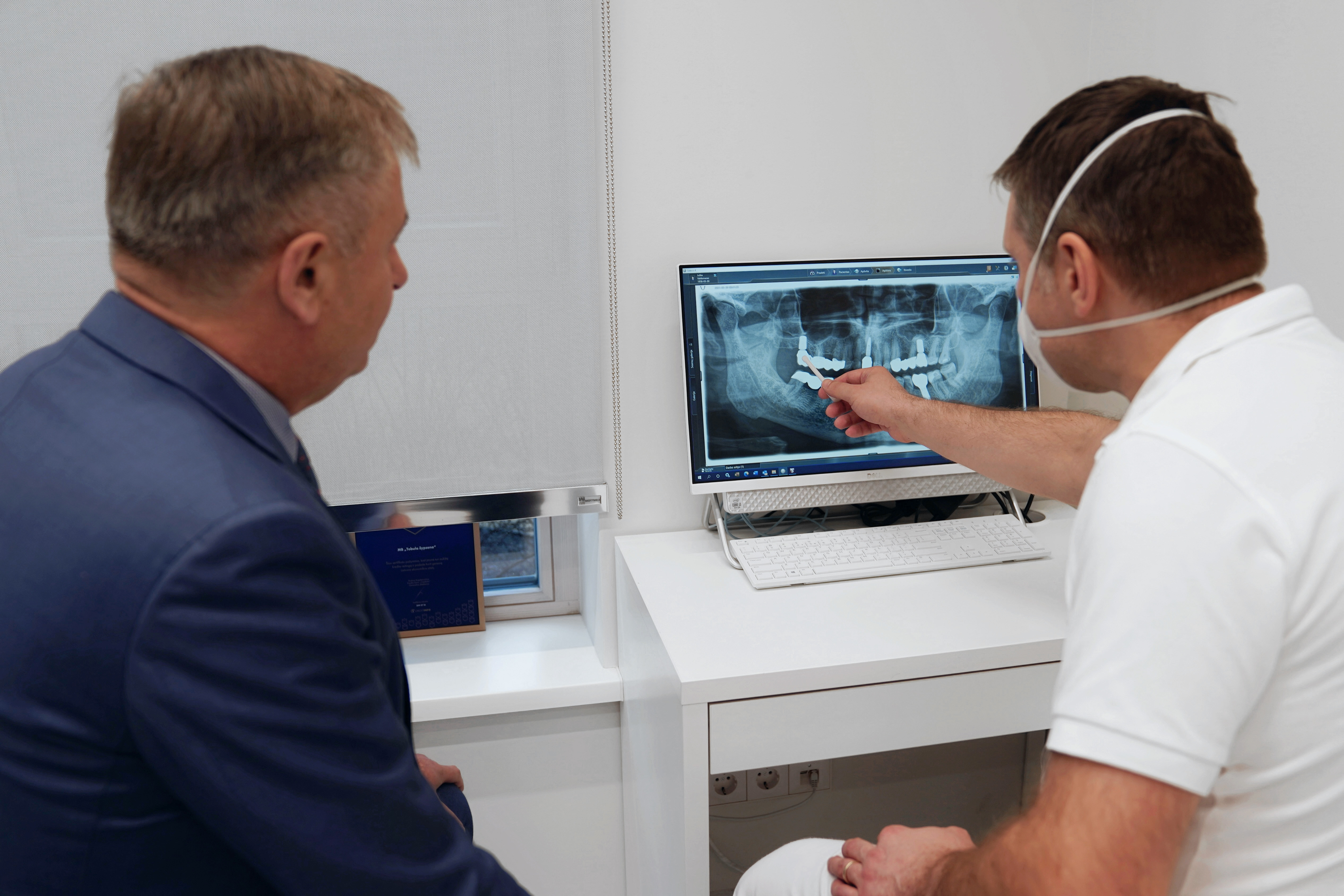
During the initial consultation, the patient's current dental condition is assessed, and a panoramic X-ray and a 3D CT scan are performed.
2
Implantation
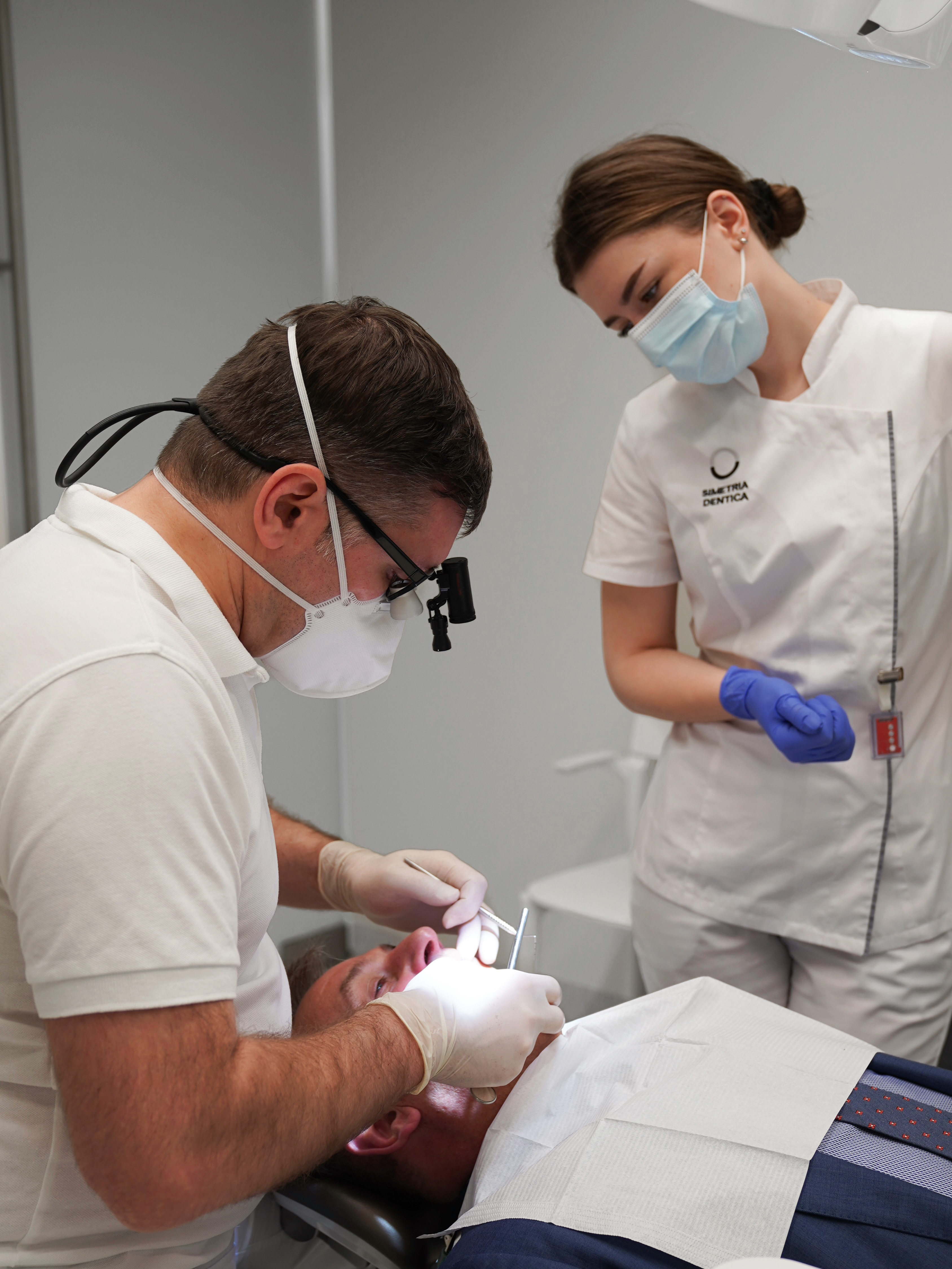
During the implant placement procedure, the implant is surgically screwed into the bone. The procedure is performed under local anesthesia, so the patient feels absolutely no pain.
3
Recovery period
The osseointegration period for dental implants—the time it takes for the implants to fuse with the bone—lasts about 2.5 to 3 months. Prosthetic restoration can be performed 2.5 to 3 months after implantation.
4
Implant-Supported Dentures
This is the final stage of the implant procedure. In order to properly restore the tooth crown, the restoration process will require several visits to a specialist—an oral surgeon.
The Dental Implantation Process
Dental Implantation is a process in which the natural tooth root is replaced with an implant—that is, a durable, root-shaped titanium screw—which is surgically screwed into the jawbone in place of the lost tooth. Dental implantation consists of two stages: A) surgical treatment and B) prosthetic restoration.
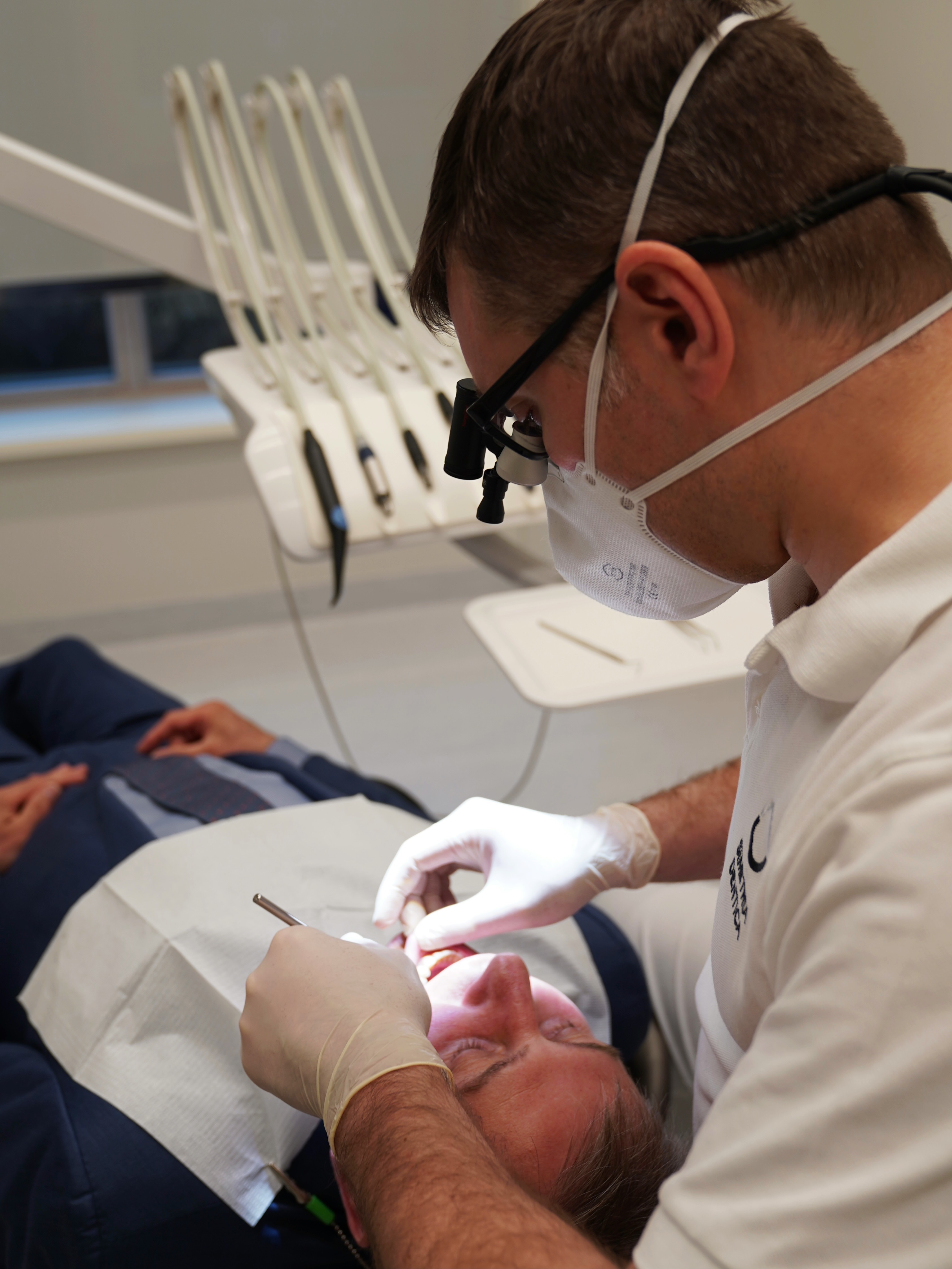
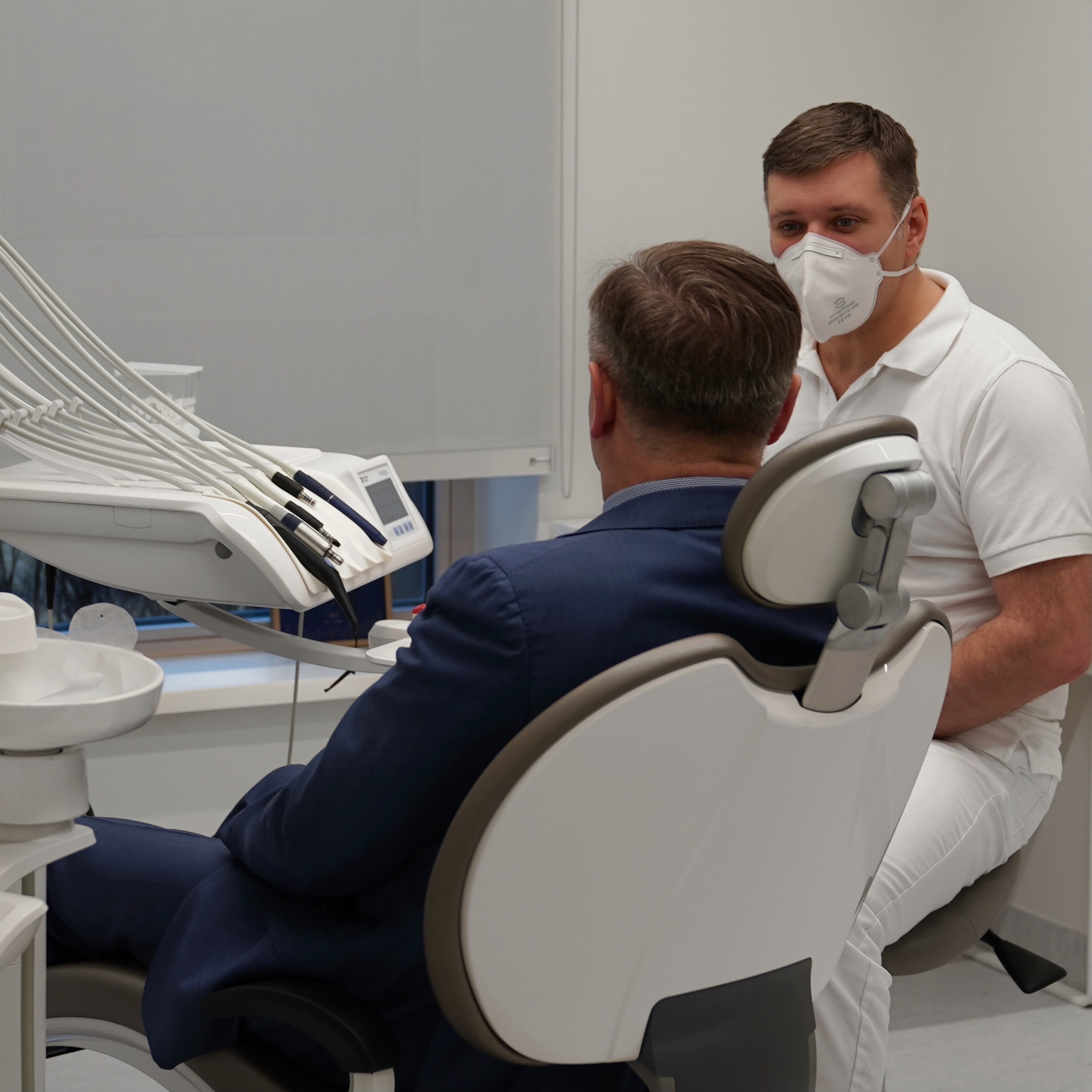
When undergoing dental implantation at the “Simetria Dentica” clinic, we can assure you that you will be treated exclusively by qualified specialists who hone their practical skills daily and continuously improve their qualifications. They will take care of your treatment and ensure high-quality results. At our clinic, we use state-of-the-art technology and the highest-quality materials to perform these procedures.
 Highly qualified professionals
 A wide range of dental services
 The Most Advanced Dental Treatment Methods
 Innovative Diagnostic Equipment


More About Dental Implants
Dental Implants are an advanced and reliable way to replace missing teeth. Dental implants can be used to replace a single tooth, several teeth, or all teeth. The treatment method is selected based on the specific situation. While they are partially similar, they differ in their attachment points and the method of attachment.
At the Simetria Dentica clinic, we work with “Straumann,” the world’s leading Swiss dental implants, which provide exceptionally high integration rates and impeccable results.
- Pluses
- Durability
- Lifetime Warranty
- Restoration of Masticatory Function
- Easy maintenance
- Rejected extremely rarely
- Protects the jawbone
- Aesthetics
- Minuses
- A relatively high price
- Duration of the treatment process
Advantages of Dental Implants
- Aesthetics. Restores a natural and attractive smile.
- Lifetime guarantee. Unlike other dental restoration methods, dental implants are characterized by their durability. Scientific studies have shown that implants integrate successfully in 98–100 percent of cases, which is why patients are offered a lifetime guarantee.
- Chewing function. Chewing function is restored to the maximum extent possible, and the patient no longer experiences discomfort when chewing food.
- Preservation of natural teeth. Implant-supported prosthetics make it possible to avoid grinding down adjacent healthy teeth and to preserve them.
- We prevent jawbone resorption. Since the implant acts as a tooth root, the bone at the site of the missing tooth is protected from resorption.
- We prevent the development of a malocclusion. The remaining teeth may begin to shift due to the newly created gap, which over time can result in an irregular and unattractive dental arch. By placing an implant, we prevent this potential shift in tooth position.
- Easy maintenance. Dental implants do not require any additional maintenance routine.
Disadvantages of Dental Implants
- Dental implants are made from the highest-quality materials, so it is understandable thatthis method of tooth restoration is somewhat more expensive than other tooth restoration alternatives. Implants—an investment for life. We strive to ensure that everyone can have a beautiful and healthy smile, which is why we offer patients the option of paying in installments (SB leasing service).
- Duration of treatment. Typically, the full dental implant procedure takes slightly longer than conventional denture placement, as the implant must remain in place for up to 3 months before the prosthesis can be attached to it. In addition, depending on the individual case, additional procedures such as bone augmentation or sinus lift surgery may be required.
Preliminary price from: 1770 €
Book a visit
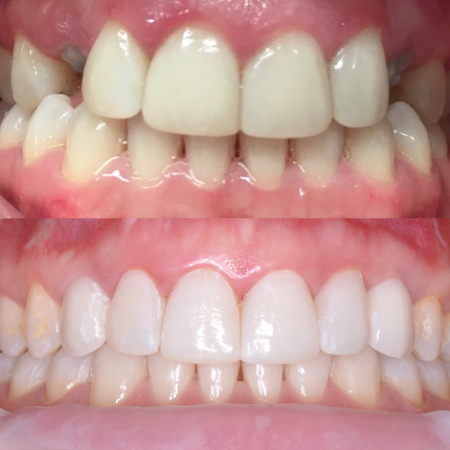
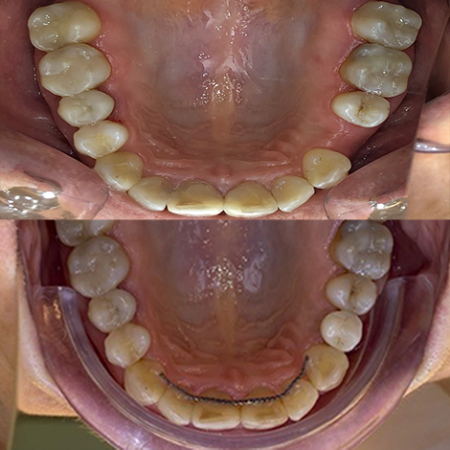

Dental Implant Gallery
![image00023[1]](https://www.simetriadentica.lt/wp-content/uploads/2018/07/image000231.jpeg)
![image00022[1]](https://www.simetriadentica.lt/wp-content/uploads/2018/07/image000221.jpeg)
![image00024[1]](https://www.simetriadentica.lt/wp-content/uploads/2018/07/image000241.jpeg)
Price table
The Dental Implant Process
The implant process consists of several separate stages, so payment for treatment is also made in stages:
1. Assessment of your condition during the consultation
- Consultation: 50–60 €
- Panoramic X-ray 30 €
- 3D CT scan 70 €
2. Professional oral hygiene 80 €
3. Implant placement with prosthetic restoration
3.1. When one tooth is missing:
- Dental implant placement 690–880 €
- Permanent zirconia crown on the implant: 800 €
- Screwing in the implant healing cap: 105 €
Total: approximately 1,770–1,930 € (including all 3 stages—assessment, oral hygiene, and implantation with a “Straumann” implant)
3.2. When several teeth are missing:
- Dental implant placement: 690–880 € (x2)
- Permanent zirconia crown on an implant: 800 € (x2)
- Screwing in the implant healing cap: 105 € (x2)
Total: approximately 3,350–3,670 € (including all 3 stages—assessment, oral hygiene, and implantation with Straumann implants)
3.3. When all teeth are missing:
We cannot provide exact treatment costs here, as all stages of the treatment process and their costs are determined on an individual basis. The cost is preliminarily estimated during the consultation, taking into account the patient’s expectations and financial capabilities.
Dental Implant Prices
Service Price
Dental implant placement €800
Permanent zirconia crown on an implant €750
Screw-in of the implant healing cap €105
Gum contouring around the implant €150
Temporary crown on an implant €200
Professional oral hygiene (ultrasonic scaling, Airflow) €80
Bone augmentation depending on the size of the defect €240–450
Sinus floor surgery (open technique) €800
Sinus floor surgery (closed technique) €270
Additional procedures that may be required during implantation:
1. Bone augmentation procedure.
When there is insufficient bone tissue in the area of missing or unerupted teeth to place an implant, bone augmentation—or, in other words, a bone-building procedure—is required prior to dental implant surgery. This is necessary when the area of the missing teeth has been empty for a long time, without any chewing load, leading to bone resorption (deterioration) and, consequently, a reduction in the height and width of the jawbone. During the bone augmentation procedure, the patient’s own bone or a bone substitute is added to the missing area. The procedure is performed under local anesthesia or, at the patient’s request, under sedation.
Depending on the bone restoration method used, dental implantation is performed 4–6 months after augmentation—that is, once the bone has healed—or bone augmentation and implantation are performed during a single surgical procedure.
2. Sinus floor elevation procedure (open or closed technique).
Sinus floor elevation is a surgical procedure in which the height of the alveolar ridge is increased by adding bone to the sinus floor. The goal of the procedure is to create sufficient alveolar ridge height to allow for successful implant placement. Bone is added to the floor of the sinus and covered with a special protective membrane. After this surgery, a waiting period of 6–9 months is required; during this time, the bone placed in the sinus integrates—it becomes vascularized and is incorporated into the patient’s own bone. At that point, the implants can be placed. In certain cases, implants can be placed during the sinus lift surgery itself, thereby saving 6–9 months of time. The method used for the sinus floor elevation procedure is determined individually by the dentist for each case.
Recommendations After Dental Implantation
Dental implant surgery is generally well tolerated by the body and therefore does not cause significant discomfort. Of course, everyone’s experience is different. Sometimes patients take pain relievers on the day of surgery, but it’s not uncommon for some to not even need them. Occasionally, the dentist prescribes antibiotics after the procedure.
Here are a few things patients who have undergone the implantation procedure should know:
- Do not eat for several hours after the procedure.
- On the first day after the procedure, avoid very hot or hard foods and avoid chewing vigorously.
- Do not drink coffee or black tea on the first day.
- Do not consume alcohol for one week after the procedure, and avoid smoking for as long as possible (smoking and alcohol hinder wound healing).
- If you experience pain, take only the pain medication prescribed by your doctor.
- Do not brush your teeth with a toothbrush on the first day of the procedure. For the remainder of the period (as specified by your doctor), brush your teeth gently using a soft-bristled toothbrush.
- Rinse your mouth with a special mouthwash (following your doctor’s individual recommendations).
- To reduce swelling in the cheek, it is recommended to apply ice wrapped in a towel to the cheek, repeating this at intervals.
- For the first day after the procedure, try to spend as much time as possible sitting or standing so that your head is not lowered.
- Avoid strenuous physical activity for about a week.
Also, remember—if you experience persistent pain after implantation, pain when swallowing saliva, severe swelling, or a fever, it is recommended that you seek medical attention immediately.